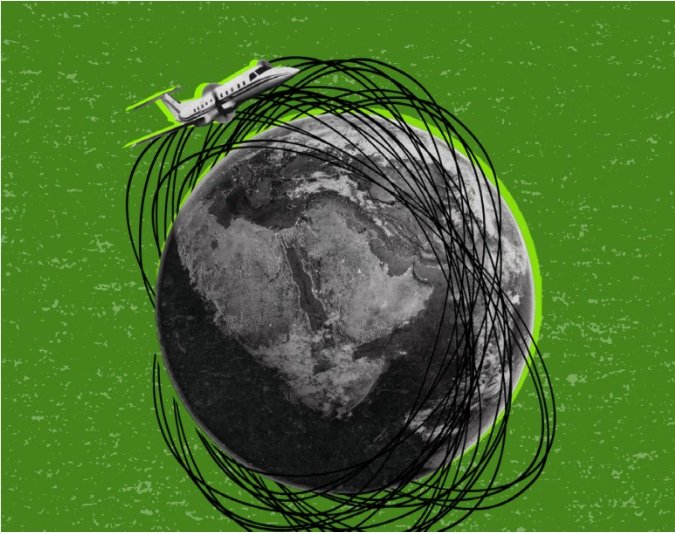
The no-brainer tax could finally make the wealthiest polluters begin to pay up for the climate damage they’re causing, helping to build public trust that fairness will be at the heart of Scotland’s response to the climate crisis.
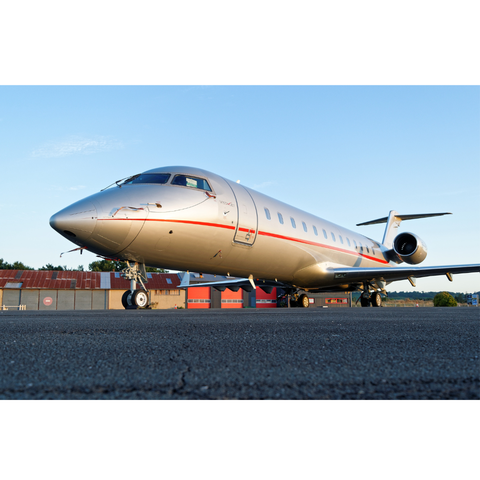
Oxfam Scotland analysis of recorded flight data shows that 10,503 private jet flights took off or landed at Scottish airports in the first ten months of 2025: 1,050 flights every month, higher than the 2024 average of 1,012 flights.
Illustrative modelling shows that if a Scottish private jet tax, set at least ten times the current UK higher Air Passenger Duty rate, had been in place, it would already have raised nearly an extra £27 million in the first ten months of 2025.
Ministers say the Private Jet tax will be introduced through the Air Departure Tax which will be implemented from April 2027, following a consultation on the continuation of the existing exemption for passengers from the Highlands and Islands. Under current plans the Private Jet tax won’t start until 2028-29. Oxfam says the rate at which the new 'private jet supplement' is set will be crucial and that the new tax must be paid by all private jet passengers using Scotland's airports.
Jamie Livingstone, Head of Oxfam Scotland, said: “This commitment to a private jet tax sends a clear message: the super-rich will no longer get a free pass to pollute Scottish skies.
“It must be brought in as soon as Air Departure Tax is operational but the true test will be how tough the tax is: it should be set sky-high so it punitively punishes the pockets of private jet passengers with the extra money raised spent on green projects that benefit us all.”
Other parts of the Budget also include positive measures. Offering more wraparound childcare support will give families a better chance of making ends meet. The increase to the Scottish Child Payment to £40 per week for families with babies under one from 2027-28 is welcome but will leave many families without the additional support they need now and is likely to fall short of what’s required to meet Scotland’s legal child poverty target.
Oxfam Scotland has long called for fairer property taxation and, while we await full details, backs the introduction by April 2028 of two new Council Tax bands for properties worth over £1 million, based on up-to-date values, to raise more resources for local services. However, much deeper reform is still needed to replace an embarrassingly outdated and unfair system.
We also warmly welcome the increased support for communities facing poverty and humanitarian crises globally, fulfilling a long-standing funding promise. In a Budget full of tough choices, this funding is a clear statement of values and it will save and improve lives.
However, with key national priorities currently under-funded and clear warnings about mounting pressures on Scotland’s future public finances, action will be needed to raise the additional resources needed to drive faster progress on crucial areas like housing, social care, climate action, and tackling poverty and inequalities.
Responding, Jamie Livingstone, Head of Oxfam Scotland, said: “The positive measures in this draft Budget must be only the beginning. Regardless of who is in power beyond the Scottish Election, we can’t keep bunging tea towels over burst pipes. A Scotland where everyone can thrive needs substantial additional investment, raised fairly, and spent well.”