Most of us probably have.
You tell yourself you'll wear it again. Then the next event comes along, a new trend appears, and before you know it, you're buying something new.
It's easy to blame ourselves for that. But the truth is we're swimming against a tide.
Fashion moves fast. New styles, new collections and new trends are constantly appearing, making it easy to feel that there's always something else we need.
But this isn't just about individual choices. It's about a $1.7 trillion business model built around ever-faster production and consumption.
And it's creating waste on a breathtaking scale.
Oxfam analysis has found that up to 40 per cent of clothes produced globally every year are never sold and never worn. That's a staggering 46 billion garments annually; enough to give every man, woman and child in Scotland more than 2,200 brand-new outfits.
Just think about that for a moment.
Not 22 outfits. Not 220.
Two thousand two hundred outfits for every single Scot.
At a time when families are counting every penny and the climate crisis is accelerating, that level of waste is devastating.
And unless things change, the problem is only going to get worse.
By 2050, the fashion industry is expected to produce 138 billion unworn garments every year, enough to stretch from Earth to Mars and back.
We have created a system that produces vast amounts of clothing that nobody actually needs, while convincing many of us that we never have enough.
Let's be honest. For many households, fashion choices aren't made in a vacuum. With budgets stretched and the cost of living still biting, it's no surprise that people are drawn to cheap clothing. That appeal is real. But the low price on the label rarely reflects the true cost of the garment.
Every item of clothing has a hidden cost and story.
Most of us don't think about water when we buy a pair of jeans. We think about the fit, colour, cut and price tag. But across the UK, clothing consumption is linked to around eight billion cubic metres of water use every year, enough to meet the UK's water needs for two years or fill Loch Ness.
Much of that cost falls on communities thousands of miles away.
Around 90 per cent of the world's garment production takes place in low and middle-income countries. Many are already facing drought, flooding, water shortages and other impacts of climate change.
The fashion industry's workforce is also predominantly female. Millions of women depend on garment jobs to support their families, often while facing low pay, difficult working conditions and long hours. At the same time, they are disproportionately affected when climate change puts pressure on food supplies, water sources and local livelihoods.
That's the hidden side of the £5 T-shirt or bargain dress. The environmental costs and human costs don't disappear because they're missing from the receipt. They're just pushed out of sight.
But out of sight doesn't mean out of mind. Scotland's consumption emissions have risen for the second year in a row, driven by the goods we buy from around the world. If we're serious about tackling climate change, we can't just look at the pollution we produce at home. We also need to reckon with the pollution linked to what we consume.
That's why Scotland's Circular Economy Act matters. For too long we've operated a throwaway economy. Buy something, use it briefly, throw it away, start again. The Circular Economy Act points us towards something better. Done properly, it could help shift Scotland away from the throwaway culture that dominates so much of our lives.
That means making repairing and reusing as normal as buying new. It means supporting charity shops, community repair projects and resale businesses. It means stopping perfectly good products from going to waste and helping people get more value from what they already own, keeping clothes in circulation for longer.
That's good for the climate, but it's also good for household budgets, local jobs and high streets.
But legislation alone isn't enough.
Scottish Ministers now need to turn the promise on paper into practical action. That means supporting reuse and repair, making sustainable choices affordable and accessible, and helping build an economy that values resources and the people that make them, instead of wasting and overlooking them.
The good news is many Scots already understand this: people across the country are already donating, repairing, reusing and shopping second-hand.
That's one reason I love Oxfam's Second Hand September campaign. It helps take the pressure off people to constantly buy more and prove that style, affordability and sustainability can go hand in hand.
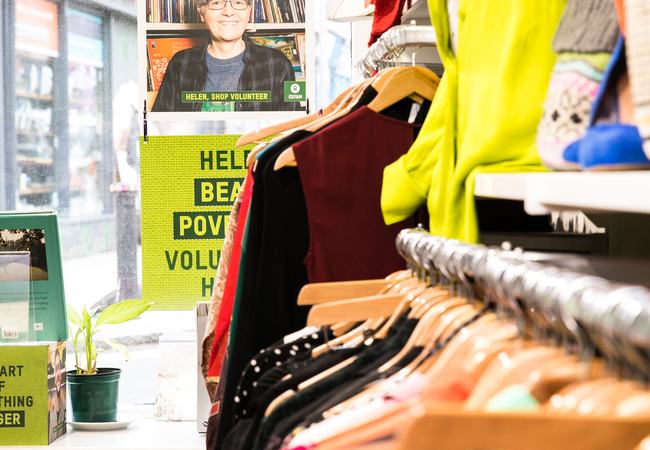
Across Scotland, Oxfam's network of 39 shops demonstrates that every day. People donate clothes they no longer need, someone else discovers a bargain and their new wardrobe staple, valuable resources stay in use for longer and the money raised helps tackle poverty and inequality around the world. And it doesn't have to mean a trip to the high street: Oxfam's online shop makes finding second-hand clothes easy, giving more garments a chance to be worn again.
When many families are watching every penny, second-hand shopping also makes economic sense. Often you can buy better quality clothes for less money than a brand-new fast-fashion equivalent. Unlike the endless cycle of new online trends, you might actually find something nobody else has. Style shouldn’t be about endlessly consuming. It's about expressing who you are.
Second Hand September isn't about guilt or perfection or telling people they can solve the climate crisis through shopping choices alone. It's about recognising that the most sustainable item of clothing is often the one that already exists.
We don't have a clothes shortage. We have wardrobes full of possibilities, warehouses full of unsold stock and a planet under pressure.
The question isn't what we're going to buy next. It's why we're producing so much in the first place.
The challenge now is for governments and industry to catch up with the many Scots already choosing to repair, reuse and shop second-hand. Scottish Ministers must use the Circular Economy Act to help make those choices affordable and accessible, while fashion brands must take responsibility for a business model built on ever-faster consumption.
Every time we choose second-hand, we can take a small but meaningful stand for a different kind of fashion; one that values what already exists, makes conscious choices and refuses to treat clothes as disposable.
This article originally appeared in The Sunday Post.