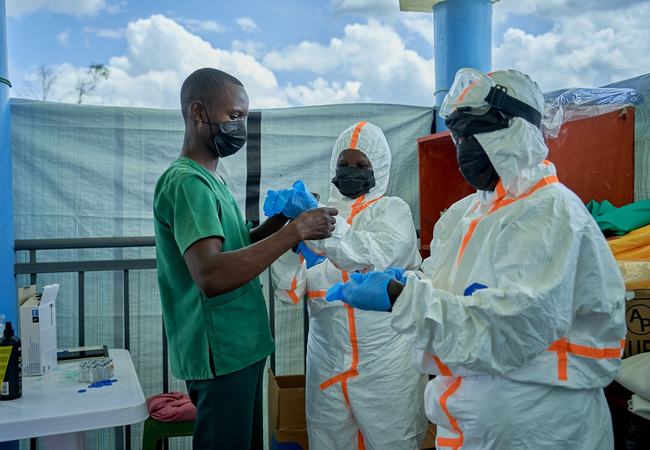
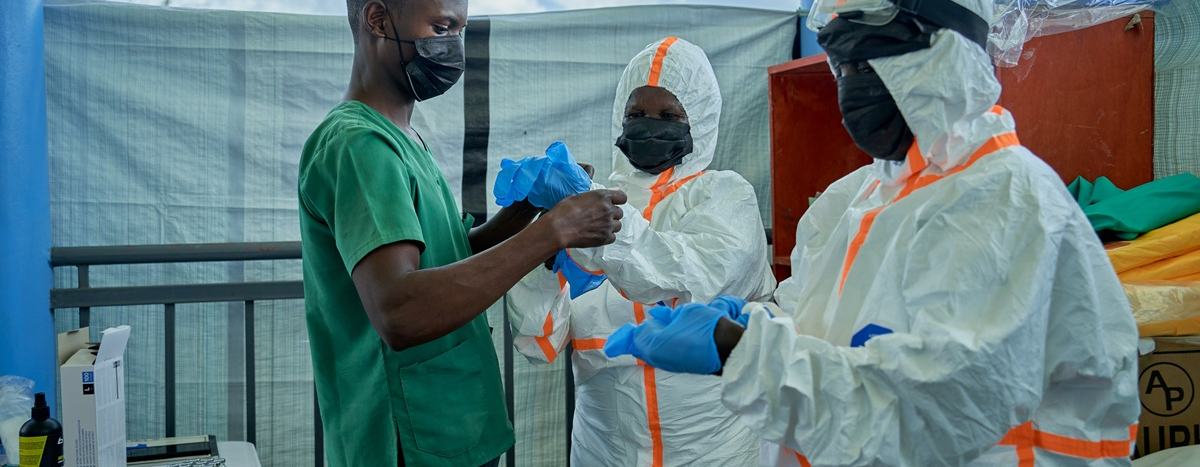
Nearly 700 cases have been confirmed in the DRC, with more than 130 deaths. The outbreak has spread across multiple provinces, reaching major urban centres like Goma and Bunia, and crossing into neighbouring Uganda. Frontline health workers – the very people trying to hold the line – are among the dead.
For many of us in Scotland, the Democratic Republic of Congo is rarely in the news. When it is, it’s framed through conflict or geopolitics. But behind the headlines are communities already stretched beyond breaking point. More than 26 million people need humanitarian assistance, with millions displaced and a health system hollowed out by insecurity and collapsing aid.
This outbreak was preventable. Years of aid cuts have shuttered clinics, weakened surveillance, and reduced access to clean water – one of the simplest defences against infection. In these conditions, Ebola doesn’t just spread; it accelerates.
In Ituri, at the centre of the outbreak, families have been driven from their homes. Clean water is scarce, sanitation is limited, and now Ebola is exploiting every one of those vulnerabilities.
Oxfam teams on the ground are seeing the consequences first-hand. “When people die at home, it means there are many more undetected cases,” one doctor in Mongbwalu reports. When people are too afraid, too far away, or too late in seeking help, infections go unrecorded and the virus spreads unseen. By the time many patients reach care, it is often too late.
Yet there is still a window, a narrowing one, to prevent this from becoming a far larger catastrophe.
Ebola is not an unsolvable problem. It can be contained through rapid, coordinated action: infection prevention, safe water, community engagement, and trust. That last element is critical. Outbreaks are not stopped by medical interventions alone; they are stopped when communities are empowered with knowledge, when misinformation is addressed, and when local leaders are part of the response.
That is why Oxfam’s work focuses on both practical and human solutions. Delivering clean water and hygiene kits, supporting health facilities with infection prevention measures and working directly with communities to build understanding and confidence in the response.
People in eastern DRC are not passive victims. They are organising, responding and calling for support. Health workers are risking their lives. Communities are adapting. What they lack is not determination or resilience, but the resources to match it.
Humanitarian organisations are being forced into impossible decisions about where to cut back. Across DRC, aid programmes have been scaled down or halted after major funding withdrawals. Services that once provided clean water, sanitation and healthcare to hundreds of thousands of people have been reduced, leaving communities exposed not only to Ebola but to cholera, measles and other preventable diseases.
This is an emergency layered on top of emergencies and it’s time for all of us to step up our support, including rich country governments and other donors.
Here, Scotland has long prided itself on its commitment to global solidarity.
While other rich nations have cut their aid, including the UK Government, the Scottish Government’s Humanitarian Emergency Fund has proved that even a small nation can have a meaningful impact. Its previous funding to the DRC in June 2025 enabled Oxfam and our local partner Solidarite pour la Promotion Sociale et la Paix to help families impacted by conflict pay for essentials such as food, fuel, shelter and medical care.
But at this critical juncture, more help is now needed.
Changes to how Scottish humanitarian funding is delivered is under way but during an Ebola epidemic, delay is measured in more infections, more lost lives and more spread.
Ebola is back. The Scottish and UK Governments must do all they can to help stop it.
This article originally appeared in The National.