This day – named by Oxfam as ‘Pollutocrat Day’ – highlights how the super-rich are disproportionately responsible for driving the climate crisis.
The emissions generated by the richest 1% in one year alone will cause an estimated 1.3 million heat-related deaths by the end of the century. Decades of over consumption by the super-rich are already hammering the economies of low and lower-middle income countries, with the damage projected to reach $44 trillion by 2050.
Oxfam says governments must crack down on the gross carbon recklessness of the super -rich, including through targeted measures like taxes on high-polluting behaviours.
With the Scottish Budget just days away, Oxfam Scotland says Scottish Ministers are missing out on tens of millions of pounds of extra tax revenue because of their failure to introduce a private jet tax in Scotland. Campaigners say Ministers must finally act to make polluters pay for their damage while curbing their pointless, privileged pollution.
Jamie Livingstone, Head of Oxfam Scotland, said: “Pollutocrat Day exposes a world turned upside down. While people in poverty all around the world are already struggling to survive the impacts of rising seas, unbearable heatwaves and record-breaking storms, a wealthy few are pumping out staggering levels of pointless pollution. It’s the height of climate inequality and injustice.
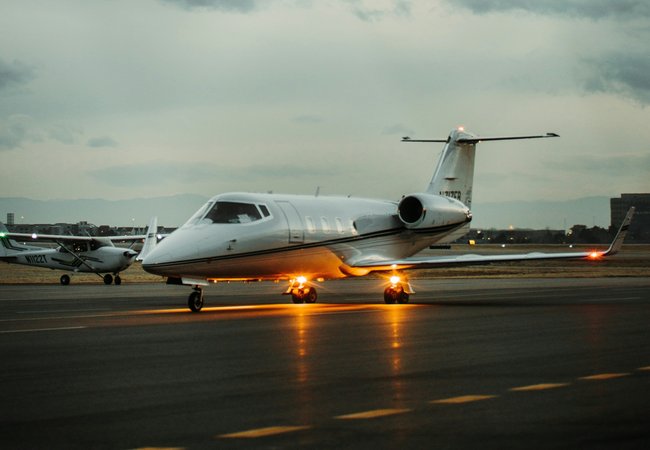
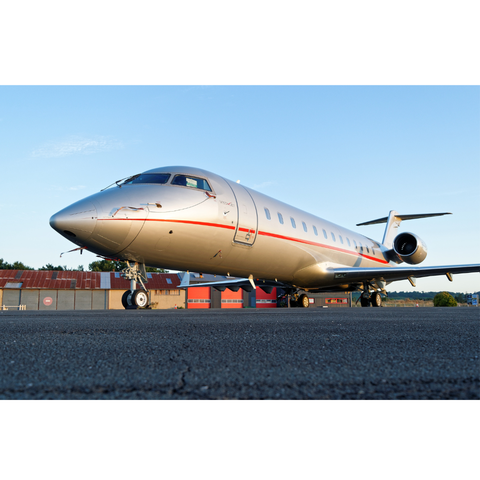
“Private jets are one of the most egregious emblems of excess; a tiny elite racking up massive emissions through choice, not necessity. Scottish Ministers must use the Scottish Budget to signal its clear intent to land a Scottish private jet tax at the earliest opportunity. This common sense, practical measure would raise tens of millions of pounds each year for fair climate action; it is painfully overdue and entirely within their grasp.”
Private jets remain one of the most polluting modes of travel on earth, emitting 20–30 times more carbon per passenger than economy flights.
New Oxfam Scotland analysis of recorded flight data shows that 10,503 private jet flights took off or landed at Scottish airports in the first ten months of 2025, that’s 1,050 flights every month, higher than the 2024 average of 1,012 flights. Nearly a fifth of the total number of private jet flights involved publicly-owned Glasgow Prestwick Airport.
Illustrative modelling shows that if a Scottish private jet tax, set at least ten times the current UK higher Air Passenger Duty rate, had been in place, it would already have raised up to an extra £26,808,522 in the first ten months of 2025. At a time when climate action in Scotland is too slow, in large part due to insufficient investment, Oxfam Scotland says this is money that could fund green transport, low-carbon infrastructure and other measures to reduce emissions fairly and more quickly.
Aviation emissions in Scotland are rising, up 20% since 1990, yet the Scottish Government’s draft Climate Change Plan makes no commitment to cut demand for flights and is entirely silent on a private jet tax.
Although the Scottish Parliament passed legislation for a devolved Air Departure Tax (ADT) in 2017, it has yet to be implemented. Oxfam Scotland says Ministers should use the Budget to commit to expediting the implementation of ADT, with a private jet tax embedded within it, and get on with the practical work needed to make it a reality, including designing a fair exemption for passengers from the Highlands and Islands, except for those using private jets.
Last year at COP30 in Brazil, a new global taskforce urged the Scottish Government to live up to its professed support for the polluter pays principle and “turn words into action” by implementing “concrete measures” to make the wealthiest flyers pay for their pollution – such as a tax on those using private jets. The Global Solidarity Levies Task Force urged Scottish Ministers to join the expanding Coalition for Solidarity Levies for Premium Flyers, a group seeking to identify new sources of finance for climate action and development.
Campaigners in Scotland say all political parties should pledge before the 2026 Scottish election to implement the private jet tax swiftly in the next Parliament. They say this is a fair first step towards the broader aviation demand-management strategy recommended by the Climate Change Committee, which could include a fair frequent flyer levy.
Jamie Livingstone added: “People in Scotland must feel climate action is being delivered fairly – and that must include punishing those pumping out pointless pollution while using Scottish skies as their personal playground. The First Minister has signalled support for a private jet tax, but progress keeps stalling behind process and paperwork. It’s time to stop circling the issue, use the Scottish Budget to make a cast-iron commitment and do the groundwork now so that we can finally get this fair, overdue tax off the ground.”
To effectively crack down on the emissions of the super-rich and make rich polluters pay, Oxfam says, globally, governments should also increase taxes on income and wealth of the super-rich, support negotiations for the UN Convention of International Tax Cooperation and fairly tax the excess profit of fossil fuel corporations.
/ENDS
For more information and interviews, please contact: Rebecca Lozza, Oxfam Media and Communications Adviser, Scotland and Wales: rlozza1@oxfam.org.uk / 07917738450
Notes to Editors
- According to the United Nations Environment Program (UNEP) Emissions Gap Report 2024, the median estimate of emissions level in 2030 consistent with limiting global heating to around 1.5°C is 24 GtCO2e (range: 20–26), which is equivalent to approximately 17.8 GtCO2 based on the 2019 share of CO2 emissions in greenhouse gas emissions (74.1 per cent). According to the UN, the global population is projected to reach 8.5 billion in 2030. Dividing the 1.5°C compatible 2030 emissions level (17.8 GtCO2) equally by 8.5 billion gives an estimate of an annual carbon budget of 2.1t CO2 per person.
- Oxfam’s latest research into climate and inequality, using data from the Stockholm Environment Institute, find that the richest 1% emit 75.1 tonnes per person per year (using 2023 data, the latest available data), or 0.206 tonnes per person per day, which means that 10.2 days of emissions is enough to use the 2.1t CO2 budget.
- Further information about carbon budgets and the data behind Oxfam’s research can be found within this methodology note.
- According to Oxfam’s report, “A planet for the Richest 99%”, the emissions of the super-rich 1% in 2019 were enough to cause 1.3 million deaths due to heat.
- Oxfam’s report, “Climate Inequality Kills”, found that the outsized consumption emissions of the world’s super-rich 1% over four decades (1990–2030) alone are causing significant net economic damage, with low- and lower-middle-income countries being most affected. Between 1990 and 2050, low- and lower-middle-income countries will accrue economic damage totalling $44 trillion.
- Access Oxfam Scotland’s methodology note on Scottish private jet flight data between January and October 2025 here:
- https://oxfam.box.com/s/pr508lbirwi94dqv1iorwxbmlbc671l4
- Read Oxfam Scotland’s 2024 report, Cleared for take-off: a private jet tax for Scotland.
- Read The Global Solidarity Levies Task Force call for the Scottish Government to join the Coalition for Solidarity Levies for Premium Flyers.